
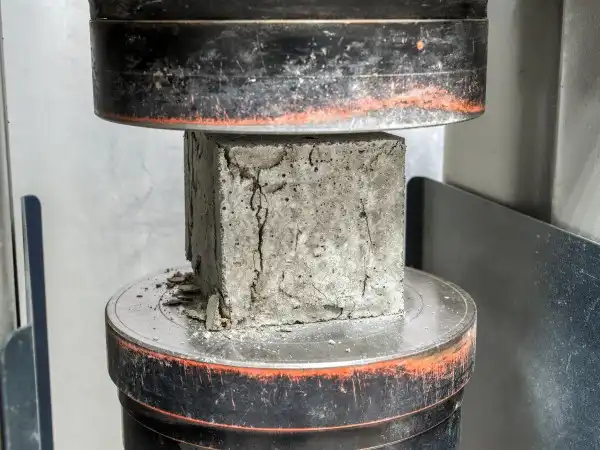
Concrete is the backbone of modern construction, and its compressive strength is a critical parameter for ensuring structural integrity and safety. While concrete is designed to withstand immense loads, engineers need reliable methods to assess its actual strength. Destructive testing (DT) methods provide the most direct and accurate measurement of a concrete sample’s compressive strength, though they come with inherent trade-offs.
What is Destructive Testing?
Destructive testing, as the name suggests, involves applying forces to a concrete specimen until it fails, thereby determining its ultimate load-bearing capacity. These methods typically involve physically breaking or damaging a sample. The most common destructive test for concrete compressive strength is the Compressive Strength Test on Cylinders or Cubes.
In this test, concrete is cast into standardized cylindrical or cubic molds, cured under controlled conditions, and then subjected to a gradually increasing compressive load in a Universal Testing Machine (UTM) until it fractures. The maximum load sustained before failure, divided by the cross-sectional area of the specimen, gives the compressive strength.
Other destructive or partially destructive methods include:
Drilled Core Testing: Cores are drilled directly from an existing concrete structure and then tested for compressive strength in a laboratory. This is considered partially destructive as it creates holes that need repair.
Pull-Out Test: A specially designed steel rod cast into the concrete (or inserted into a drilled hole) is pulled out, and the force required to pull it out is correlated to the concrete’s strength. This method also causes localized damage.
Flexural Strength Test: While primarily for tensile strength in bending, it’s a destructive test that can provide insights into concrete’s overall mechanical properties.
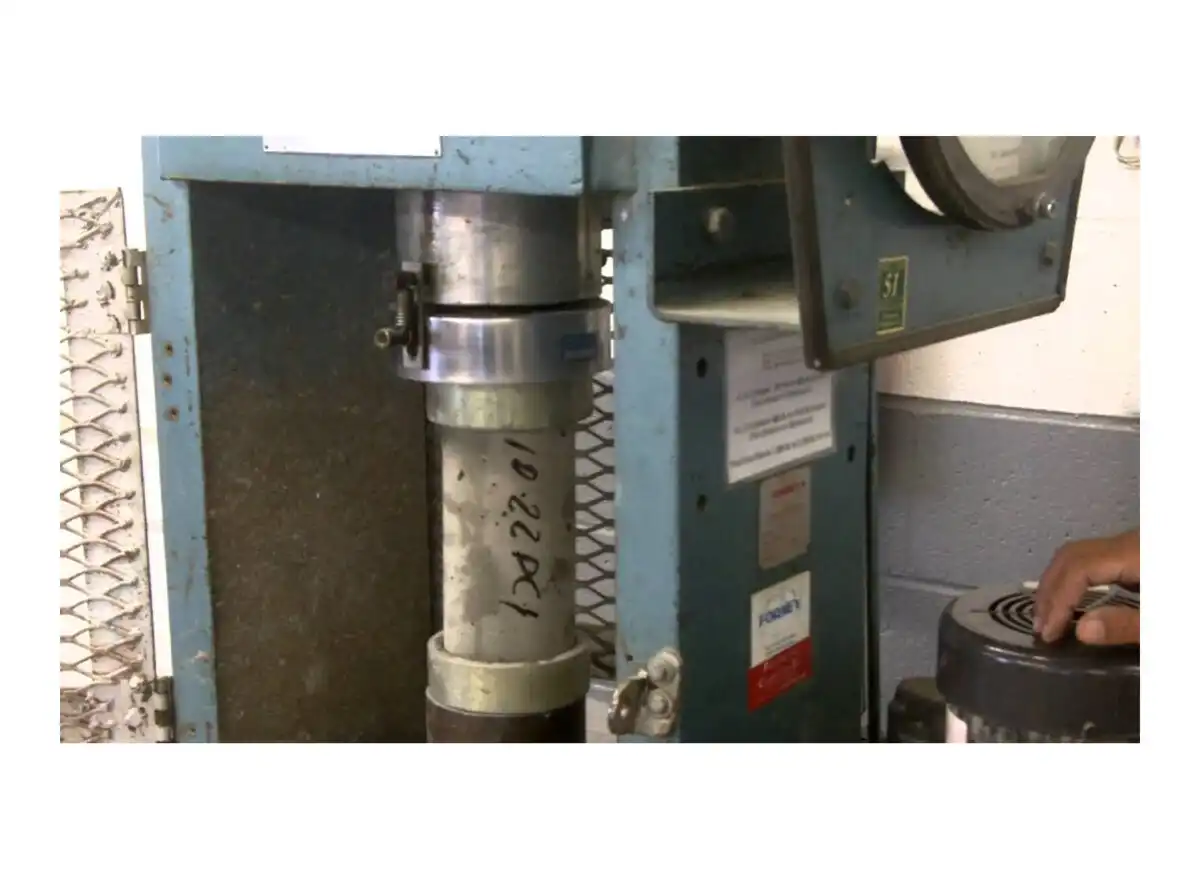
Advantages of Destructive Testing:
Direct and Accurate Results: DT provides the most direct and reliable measure of concrete’s ultimate compressive strength. It is considered the “gold standard” against which other methods are often calibrated.
Detailed Material Behavior: By observing the failure mode of the specimen, engineers can gain valuable insights into the concrete’s internal structure, homogeneity, and how it behaves under extreme loads.
Quality Control and Acceptance: For new construction, destructive tests on cast specimens are crucial for quality control, verifying that the concrete supplied meets the specified design strength.
Failure Analysis: In cases of structural failure or concern, destructive testing of samples from the compromised area can help pinpoint the cause of the failure.
Disadvantages of Destructive Testing:
Sample Destruction: The most obvious drawback is that the tested sample is destroyed and cannot be reused, leading to material waste and potential costs.
1- Time-Consuming: Concrete specimens require curing for a specific period (typically 7, 28, or 56 days) before testing, meaning results are not immediately available for in-situ concrete.
2- Inconvenience for Existing Structures: Drilling cores from existing structures is intrusive, creates holes that need repair, and can be impractical or undesirable for aesthetic or structural reasons in sensitive areas.
3- Limited Scope for In-Situ Testing: While core testing offers in-situ strength, it only provides information from specific drilled locations, and a representative number of cores is needed for a reliable assessment of a large structure.
4- Cost: Preparing, curing, transporting, and testing numerous specimens can add to project costs.
In conclusion, destructive testing, particularly the compressive strength test on cylinders or cubes, remains indispensable for accurately determining concrete strength. While its destructive nature and time requirements present limitations, the direct and definitive data it provides is often critical for ensuring the safety and performance of concrete structures.
